

You’ve probably seen the term “power backlinks” thrown around in SEO communities, packages, and service pages that promise “insane ranking boosts.”
Some sellers talk about DA70+ blasts, others about PBN power links, and some position power backlinks as premium, manual outreach guest posts on strong real websites.
So what are “power backlinks” actually?
Are they just a rebranded guest post?
And more importantly: when are they worth paying for, and when do they become a liability?
This guide breaks down the concept of power backlinks, cuts through the hype, and shows you how to use these links strategically without gambling your domain.
What are power backlinks?
“Power backlinks” isn’t an official Google term. It’s a marketing label for links that are expected to move rankings more than “regular” links.
In practice, most people use term to describe links that:
- Come from high-authority sites (strong DR/DA, solid link profiles)
- Have real organic traffic in your niche, not just inflated metrics
- Are placed contextually in the main content, not buried in sidebars or footers
- Are usually limited in volume but high in individual impact
Some providers sell power backlinks as:
- Premium blogger outreach placements on genuine blogs, priced by traffic and DR
- High-DA PBN or network links on strong domains (often riskier)
- Edu/Gov or “authority” packages that bundle a set number of links with big metrics
Strip away the labels and you get a simple idea:
A power backlink is a high-trust, high-relevance link that passes enough authority and context to move competitive keywords.
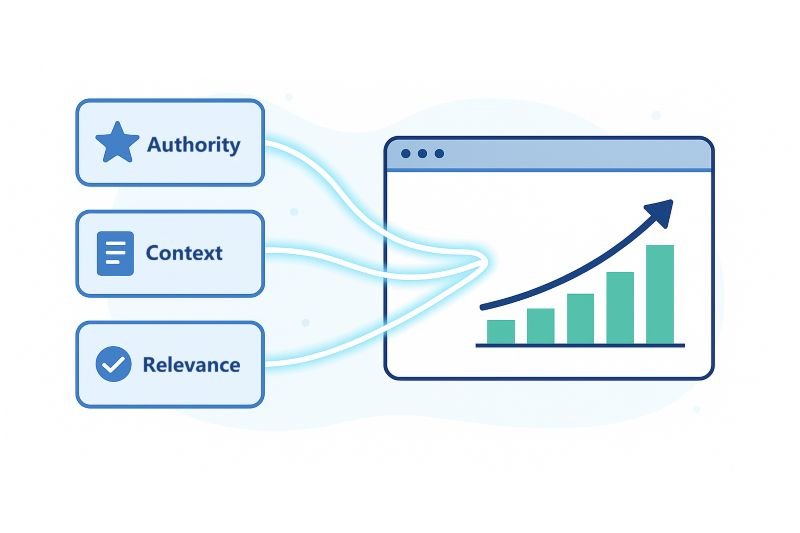
The “power” comes from a combination of authority + relevance + placement, not just a big DA or DR number.
Power backlinks vs normal backlinks
Most sites earn or build a mix of links:
- Brand mentions
- Niche edits / link insertions
- Guest posts on mid-tier blogs
- Directory links, profiles, citations
- PR, features, interviews, etc.
Power backlinks sit at the top of that pyramid:
- The site linking to you is trusted by Google (strong backlink profile, no obvious spam signals)
- It has real, consistent traffic in your niche
- Your link is inside a relevant article, surrounded by semantically related content
- The page itself may already rank and attract links, amplifying the effect
A mediocre link might nudge a long-tail keyword.
A truly strong “power link” can move core money keywords and help unlock entire clusters.
White-hat vs grey-hat versions of “power backlinks”
Here’s where it gets tricky.
Because the term sounds attractive, two completely different tactics are often sold under the same label:
White-hat / editorial “power” links
- Manual outreach to real sites
- Unique content written for the publisher
- Placements on relevant blogs, magazines, or niche sites
- Strong metrics plus human readers
Grey-hat / PBN or network “power” links
- Private blog networks with high DA but little real audience
- Sites built primarily to sell links
- Home-page or sitewide placements
- Heavy risk if the network gets devalued or penalized
Both can move the needle.
The difference is risk profile and longevity:
- White-hat power links age well and often keep helping for years (because the linking site itself keeps getting links).
- Network/PBN power links may work fast but are more vulnerable to updates and manual actions.
If you’re building a brand or managing client sites, you generally want backlinks that would still look normal if Google employees manually reviewed your link profile.
How these backlinks actually influence rankings
Why can a handful of powerful links outperform dozens of weaker ones?
A strong link usually combines:
Domain-level authority
The linking site has:
- Earned its own high-quality backlinks over time
- A relatively clean outbound link profile
- A history of ranking and getting traffic in relevant topics
That gives its “vote” more weight.
Page-level strength
The specific page linking to you might already:
- Rank for meaningful keywords
- Have links of its own
- Attract impressions and clicks
A contextual link from a page like that can pass more equity than one from an orphaned, low-traffic article.
Topical relevance
The site and article are contextually related to your topic. Search engines now care a lot about topical neighborhoods.
Anchor text and surrounding context
Your anchor text and the text around it help search engines understand what your page should rank for.
Put together, a good power backlink acts like a high-weight vote in your favor for specific topics and keywords.
When does it actually make sense to invest in these links?
You don’t need power backlinks on day one of a brand new site.
They’re most effective when:
- Technical SEO and basic on-page work are under control
- You’ve already built a baseline of diversified links
- Your content aligns with search intent and is genuinely useful
- Your important pages are stuck around page 2 or the lower half of page 1
- You’re in a competitive niche where rivals are also actively building authority
If your site is thin on content, full of technical issues and lacking any brand signals or basic links… then power backlinks won’t magically fix that. They’ll just become expensive band aids.
Think of it this way:
Power backlinks amplify what you already have.
If the foundation is weak, they amplify the weak. If the foundation is strong, they amplify growth.
What a good “power backlink” service should look like
If you’re considering working with a provider, here’s what a solid, relatively safe service usually does:
- Starts with an audit
They look at your site, backlink profile, competitors, and priority keywords rather than selling a random pack. - Defines clear quality thresholds
For example:- Organic traffic minimums (not just DR/DA)
- Spam thresholds (low spam scores, clean anchors)
- Topical categories that match your niche
- Performs real outreach
They pitch genuine blogs and publishers, not just drop links on their own network of sites. - Publishes contextual content
Articles are written to fit the site and audience, with your link included naturally in the body. - Keeps things transparent
You know where your links went, how they were acquired, and what anchors were used (or at least get real examples).
Compare that to low-quality offers that just promise:
“100+ DA70 power backlinks for $25”
Those are almost always automated, network-based or spam heavy links. They may move something in the short term but are rarely worth the long term risk.
Checklist: how to evaluate any “power backlinks” offer
Before you buy, run every offer through a simple filter:
1. Do they define what they’re selling?
If they can’t clearly explain what makes their links powerful (traffic, relevance, editorial standards), that’s a red flag.
2. Can you see real examples?
Ask for a sample list with URLs blurred but metrics, traffic and screenshots visible, or anonymized examples you can check in Ahrefs/SEMrush.
3. Does the site get relevant organic traffic??
A DR60 domain with zero traffic is suspicious. High quality backlinks should come from sites that rank and get visitors in your niche.
4. Where does the link live on the page?
Ideally in the main content, inside a relevant paragraph. Avoid sidebars, footers, author bios, or pages stacked with dozens of commercial links.
5. How controlled is anchor text?
Good providers push for natural, varied anchors instead of letting you stuff exact matches everywhere.
6. Is there a footprint?
Patterns like similar themes, thin content, random topics, and identical outbound anchors across multiple domains often point to a network.
7. What’s the refund or replacement policy?
A serious provider will stand behind placements (e.g., replace if removed within X months).
Beyond buying: how to earn it naturally
Not every power backlink has to be paid for.
You can attract them by creating things people want to reference:
- Original data & studies
Surveys, industry benchmarks, pricing studies, or “state of the industry” reports are classic link magnets. - In-depth, evergreen guides
When your guide becomes the piece people reference to explain a topic, it naturally attracts links. Think well-structured, well-illustrated content that goes beyond surface-level tips. - Editorial collaborations and roundups
Roundups, interviews, and co-created content with experts can lead to links from their sites and from other blogs that quote or reference the piece. - Useful tools & calculators
Free utilities are often cited by bloggers and resource pages. Even something simple but genuinely useful can earn high-quality mentions.
Combine these assets with smart outreach, and some of the best links you’ll ever get won’t be “bought” in a traditional way at all.
Best practices for using powerful links safely
A few principles can keep your strategy on the right side of the line.
Match link velocity to your site
Flooding a small, quiet domain with a large batch of high-authority links in a short time can look unnatural. Grow authority in a way that matches your site’s size and history.
Keep anchors natural
Mix brand, URL, partial match, and topical phrases. Use exact-match anchors sparingly, especially on newer domains.
Spread links across a logical cluster
Don’t throw every link at one page. Support the surrounding cluster: main page, supporting blog posts, comparison pages, etc.
Continually improve your target pages
If a power backlink is pointing to a weak page, upgrade that page: refine the copy, clarify the offer and value, improve layout, UX, and supporting elements.
Monitor impact and adjust
Watch how rankings and traffic move after each batch. If things move in the wrong direction or stay flat, reassess your sources, anchors, and page choices.
Common mistakes with power backlinks
A few pitfalls to avoid:
Chasing DR/DA only
Power comes from traffic + relevance + trust, not pretty DR/DA score alone.
Confusing “more expensive” with “more powerful”
High price doesn’t guarantee quality. Always check samples and patterns.
Ignoring topical fit
A DR 80 parenting blog linking to a B2B cybersecurity product doesn’t send a strong topical signal, no matter how big the number looks.
Relying only on power backlinks
You still need a normal, diverse link profile: branded mentions, citations, niche placements, internal links, etc.
Buying into obvious link farms
If most of your authority comes from obvious link farms, you’re building on sand.
FAQs about power backlinks
Are power backlinks safe for SEO?
They can be safe if they’re editorial, relevant, and earned or placed on real websites. They become risky when they’re coming from obvious networks, spammy link farms, or PBNs built purely for selling links.
How many power backlinks do I need?
There’s no fixed number. In many cases, a small handful of strong, well-chosen links to the right pages does more than dozens of weak ones.
Should I these backlinks or build them manually?
Ideally, you do both:
- Invest in high-quality outreach (in-house or via a partner)
- Build linkable assets that naturally attract strong references over time
Can these links help with AI-first search and generative overviews?
Yes. Strong, trusted links are still a core signal of authority. As search becomes more AI-driven, authority and trust remain key inputs into which brands are surfaced and summarized.
Wrap-up
“Power backlinks” is just a label.
Behind it is a simple truth:
A small number of high-quality, contextually relevant backlinks from trusted sites can move your most important keywords faster than a large pile of mediocre links.
If you treat these links as a part inside a broader strategy – content, technical SEO, diversified links, and brand-building – they can be a smart investment.
If you treat them as a shortcut that replaces everything else, they can just as quickly become an expensive mistake. If you’re at the stage where this type of link makes sense but you don’t have the time or team to find sites, do outreach, and manage placements, you don’t have to do it alone. You can keep control of the strategy while a specialist link building partner handles the research, negotiation, and execution in the background, so you get the impact of powerful links without turning your week into inbox ping-pong.