

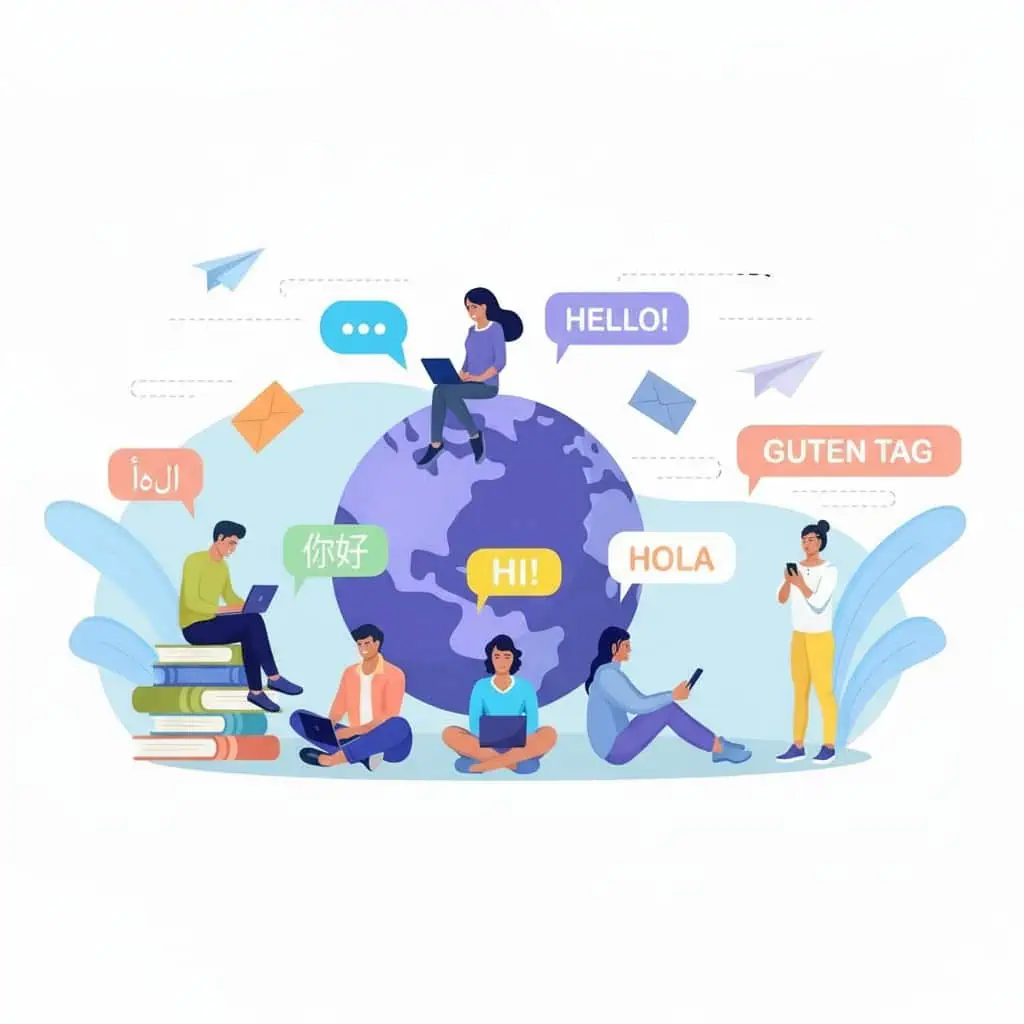
Expanding your link building efforts into non-English markets is a golden opportunity to acquire high-authority, relevant backlinks that your competitors are missing. However, simply translating your tried-and-tested English templates will get you nowhere. Your emails will land in the trash, marked as spam.
To earn links from international webmasters and editors, you must move beyond translation and adopt a culturally intelligent approach. These 10 tweaks will help you transform your outreach from generic spam into a compelling pitch, doubling your response and link acquisition rates.
Who this is for
Agencies, in-house SEOs, founders, and outreach teams pitching editors and site owners in ES, FR, DE, IT, Nordics, Eastern Europe, and LATAM. If you run blogger outreach, country-specific link building, or multilingual link building, this is for you.
The baseline you will iterate
Your reply rate lives at the intersection of Market, Persona, Channel, Message, Proof, and Timing. Most teams only translate the Message. The lift happens when all six match the local context.
Start by benchmarking one market with your current templates. Record open rate, reply rate, and positive-intent rate. Everything below plugs into that baseline.
1. Go Beyond Translation: Truly Localize Your Pitch
This is the cardinal rule. A direct or machine translation of your content pitch or guest post idea will immediately expose you as an outsider. Localization adapts your entire message – the value proposition, the content idea, and the tone to feel 100% native.
A localized pitch shows an editor you understand their audience, not just your own. It proves you’ve invested time to learn what resonates in their culture, building instant credibility.
How to do it:
- Don’t Use: Google Translate to pitch your article “The Ultimate Guide to American BBQ” to a blog in Argentina.
- Do This Instead: Hire a native speaker to help you reframe the pitch. They would suggest changing the topic to “The Ultimate Guide to a Perfect Asado,” referencing local techniques and traditions. This localized angle is infinitely more appealing to an Argentinian editor.
2. Nail the Formality: Editor, Señor, or Mate?
Different cultures have strict rules about professional communication. A casual “Hey [First Name]” might work in the US, but it can be a deal-breaker in more formal cultures like Germany or Japan, where it’s seen as disrespectful.
Addressing an editor or webmaster with the proper level of formality shows respect for them and their publication. It’s a simple step that prevents your email from being deleted before the pitch is even read.
How to do it:
- Research the Norm: Understand if the target culture uses formal titles (e.g., Herr/Frau in Germany, Monsieur/Madame in France). When in doubt, start formally. You can always adjust your tone if they reply more casually.
- Example (Pitching a German blog):
- Poor: “Hey Peter, Loved your blog! Got a guest post idea for you.”
- Better: “Sehr geehrter Herr Schmidt,” (Dear Mr. Schmidt,) “ich verfolge Ihren Blog schon eine Weile und bin sehr beeindruckt…” (I have been following your blog for a while and am very impressed…)
3. Ditch the SEO Jargon and English Idioms jargon
Your outreach is filled with idioms and jargon: “killer content,” “link juice,” “low-hanging fruit,” “skyrocket your rankings.” These phrases mean nothing to a non-native English speaker and make your email confusing and unprofessional.
Clear, simple, and direct language ensures your value proposition is understood. By removing confusing jargon, you make it easy for the editor to see the benefit of linking to your resource or accepting your guest post.
How to do it:
- Scrub Your Templates: Remove any marketing slang.
- Be Direct:
- Instead of: “This piece of killer content will add a ton of value and link juice.”
- Say: “This guide contains useful information that I believe your readers would appreciate.”
4. Master Local Time & Timing
This is more than just converting time zones. It’s about understanding the work rhythm of an editor in another country. Sending a pitch during a national holiday or on a day they don’t work is a wasted effort.
An email that arrives on a Tuesday morning (local time) has a much higher chance of being read than one that arrives late on a Friday afternoon or on Sunday (the start of the work week in parts of the Middle East).
How to do it:
- Check Holiday Calendars: Never run a campaign during France’s Bastille Day or Spain’s “puentes” (long holiday weekends).
- Know the Work Week: Remember that in Israel and many Muslim countries, the weekend is Friday/Saturday.
- Time Your Send: Aim for mid-morning, Tuesday through Thursday. Avoid Monday mornings when inboxes are flooded.
5. Personalize with Hyper-Local Context
Personalization like “I loved your article on {article_title}” is standard. To truly stand out, your personalization needs to be culturally and locally relevant.
It proves you are a genuine reader and not a robot scraping websites. Referencing something specifically local shows a level of effort that 99% of outreach emails lack.
How to do it:
- Mention a Local Competitor: “I saw your recent article analyzing [Local Company A]. I have a piece that offers a counter-argument focusing on the strategy of [Local Company B] that might interest your readers.”
- Reference a Local Event: “With the [Local Festival/Conference Name] coming up in [City], I thought your audience would find our guide to [Topic] particularly timely.”
6. Craft Culturally-Resonant Subject Lines
A direct, “Link Opportunity” subject line might work in some places, but it will be seen as transactional and rude in others. In relationship-focused cultures, a softer, more inquisitive subject line performs better.
The subject line’s only job is to get the email opened. By tailoring it to cultural expectations, you avoid being instantly flagged as a spammer.
How to do it:
- Direct (e.g., USA): “Guest Post Idea: 10 Ways to Improve X”
- Indirect (e.g., Japan): 「[ブログ名]の記事に関するご質問」 ([Blog Name] no kiji ni kansuru goshitsumon) – “A question regarding an article on [Blog Name]”
- Collaborative (e.g., Spain): “Una colaboración para tu blog” (A collaboration for your blog)
7. Leverage Local Social Proof
Telling a Spanish blogger that you’ve been featured on Forbes is good. Telling them you’ve been featured on El País or El Mundo is 10x more powerful.
Editors trust publications their audience trusts. Local social proof is far more relevant and impressive than name-dropping foreign sites they may not know or care about.
How to do it:
- Prioritize Local Placements: When pitching, always lead with examples of your content being featured on other respected sites in their country.
- Example: “Our research has been well-received and was recently featured on [Top Local News Site] and [Respected Industry Blog in their Country].”
8. Adapt Your Call-to-Action (The “Ask”)
How you ask for the link is critical. A demanding “Please add this link to your article” will fail in cultures that value politeness and subtlety. Your ask should be a suggestion, not a demand.
A softer CTA respects the editor’s authority and intelligence. It frames the link as a benefit to their readers, not just to you, making them more receptive.
How to do it:
- Hard CTA: “You should link to our guide here.”
- Softer CTA: “Perhaps this could be a valuable addition for your readers? I’ll leave it to you to decide.”
- Guest Post Soft CTA: “If you are currently accepting contributions, I would be honored to write a piece for you. Let me know if you’d be open to hearing some ideas.”
9. Choose the Right Channel
Don’t assume the editor@domain.com email address is the best way to reach someone. In Germany, editors are highly active on XING. In France, many journalists and bloggers prefer Twitter.
Contacting someone on their preferred platform cuts through the noise of their overflowing email inbox. A short, polite message on social media can be a great way to start a conversation before sending a formal pitch.
How to do it:
- Investigate: Look at the site’s contact page and the editor’s social media profiles to see where they are most active.
- Warm Up the Lead: Before sending your email, engage with them on their preferred platform. Share their content or reply to a post. This makes your name familiar when your email finally arrives.
10. Follow Up with Finesse, Not Force
An aggressive follow-up cadence (“bumping this to the top of your inbox”) is the fastest way to get blacklisted in many parts of the world. Your follow-up strategy must be patient and value-driven.
A respectful follow-up preserves the potential for a future relationship, even if the answer is “no” for now. It shows you’re a professional, not a pest.
How to do it:
- Add More Time: Wait at least a full week before sending a follow-up, and even longer in more relationship-focused cultures like Japan.
- Add New Value: Don’t just “check in.” Your follow-up should offer something new. For example: “Hi [Name], just following up on my previous email. I also saw you wrote about [New Topic], and thought you might find this other resource we created interesting.”
- Limit Your Attempts: In many cultures, two polite attempts without a response is a clear signal to stop. Respect their silence and move on.