

Guest blogging vs blogger outreach: differences and advantages
The key differences between guest blogging and blogger outreach, how each earns links, and which one fits your goals, budget and resources.
6 min read
 Published by Waqas Nasir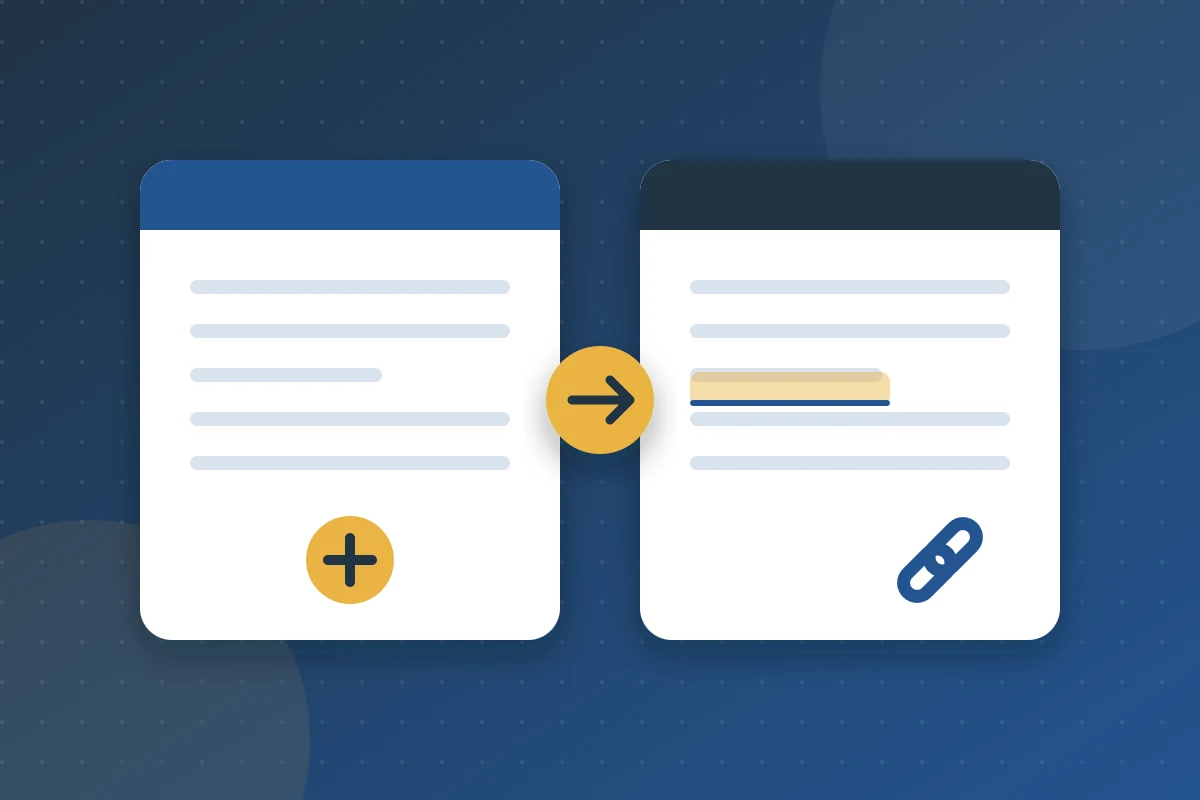
Guest posting and niche edits are two of the most common ways to get a link placed on another site. They sound similar, but they work differently, and starting with the wrong one can cost you time or money. So which should you start with?
Guest posting builds a new page for you, on someone else's site. A niche edit puts your link into a page that already exists. Guest posts give you more control and more brand value. Niche edits are quicker and usually need less effort. Most brands end up using both.
The rest of this guide helps you decide which to start with, and what to watch out for.
| Item | Guest posting | Niche edits (link insertions) |
|---|---|---|
| What it is | You write a new article that's published on another site | Your link is added to an existing article |
| Content needed | A full article | Usually just a sentence or two of context |
| Control over the context | High: you shape the whole piece | Limited: it's someone else's text |
| Speed | Slower: pitch, write, edit, publish | Usually faster: no new article to produce |
| Effort and cost | Higher | Usually lower |
| Brand value | Higher: your byline, your ideas, your audience | Lower: your link is one mention among others |
| Main risk | Weak sites and thin articles | Old, irrelevant or low-quality pages |
| Best for | Authority, thought leadership, new audiences | Strengthening key pages, faster link growth |
Guest posting means writing an original article for another website. The article includes a link back to yours, usually in the body or the author bio. Done well, you get a link, a new audience and a credible place to show your expertise. Our page on guest posting explains how we run it.
Niche edits, also called link insertions or curated links, add your link to an article that's already published. You're borrowing a page that already exists, and possibly already ranks and gets read.
Ask these questions.
Both take time to show up in rankings, whichever method you use: weeks or months, not days.
Yes, and it's often the best choice. A simple way to combine them:
That's roughly the mix in our home decor case study, where guest posts, niche edits and localized digital PR were all part of the campaign.
Because you're relying on someone else's page, check it before you agree.
Check the page before you agree
Our guide to link quality metrics goes deeper on what to look for.
Both methods can involve payment, and Google has clear rules. Its spam policies say that buying or selling links for ranking purposes is link spam. They also say that paid links are fine as long as they carry rel="nofollow" or rel="sponsored", and that advertorials with payment and optimized anchor text are a violation. We explain the values in our guide to link rel attributes.
When we place links for clients, whether a publisher labels a placement depends on the publisher and the country. If a placement will carry a label, we tell you before you approve the site, and you decide whether to go ahead.
There's no official difference. What matters is the quality and relevance of the page and the site, not the method. A relevant link on a trusted page is worth having either way.
They can be, if the page is relevant and of good quality and the link fits naturally. They become risky when they're placed in irrelevant or low-quality pages, or in bulk with optimized anchors.
Usually not more than a sentence or two, sometimes with a short supporting paragraph. That's why they're faster.
A brand-new site usually gains more from good guest posts, because they build brand and authority. Niche edits work best once you have strong pages to point them at.
You choose the sites from a shortlist and approve the content before anything is published, whether it's a guest post or a link insertion. The steps are in the how it works section on our homepage.
Checked on 30 September 2026.

Tell us your niche and markets. We’ll send a shortlist of sites to choose from.
The key differences between guest blogging and blogger outreach, how each earns links, and which one fits your goals, budget and resources.
6 min read
Stuck between link building packages vs. custom campaigns? We compare flexibility, cost-efficiency & control. Find the right strategy for your brand.
14 min read
Backlink types explained: editorial, guest post, niche edit, directory, forum, paid and more. What each is worth, and which ones Google treats as spam.
7 min read
Tell us your niche and markets. We’ll send a shortlist of sites to choose from.