Topical Map for SEO: What It Is and How to Create One
Stop publishing random posts. Learn exactly what a topical map is, compare tools, and how to turn a keyword list into a full content roadmap.
12 min read
 Published by Waqas Nasir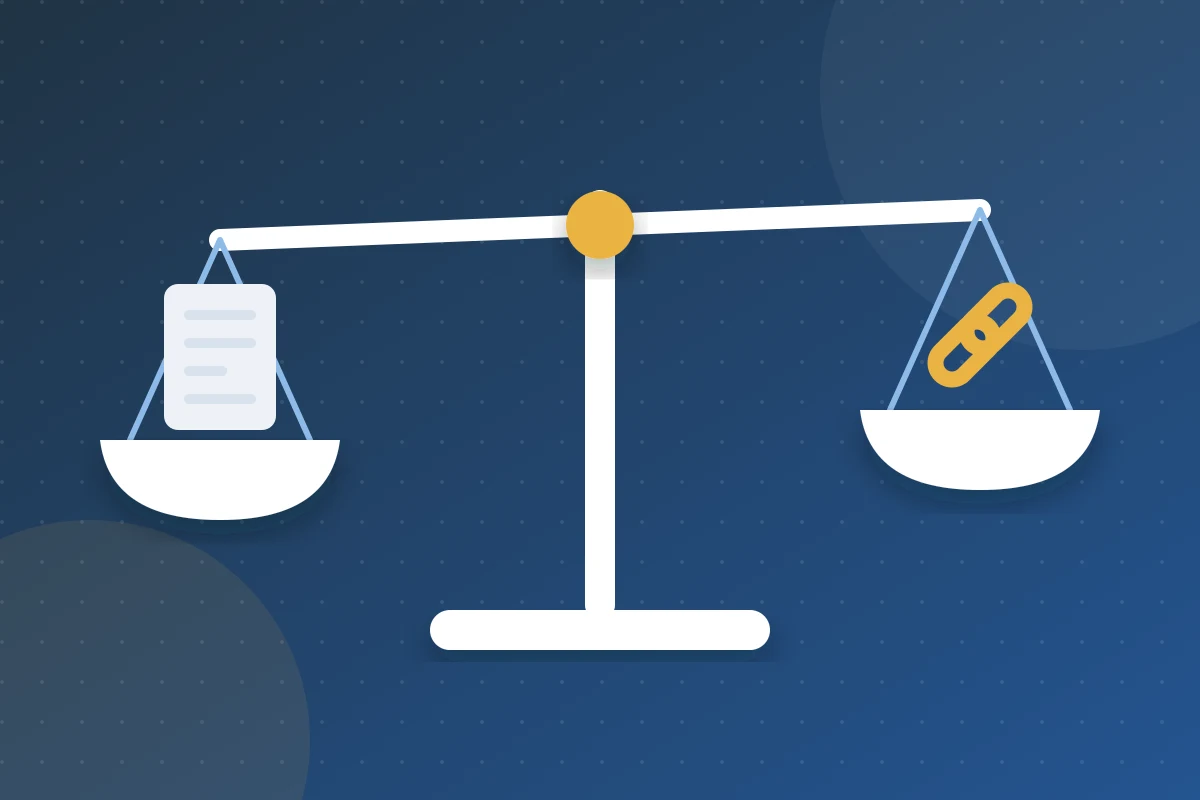
(Investing In Content vs. Link Building)
Links can help a good page rank. But they don’t fix a weak value proposition, thin content, or a site that search engines don’t fully trust yet. Sometimes the smartest growth move is to ease off links for a while and build content strength first.
This isn’t about giving up. It’s a change of focus. This guide gives you signals to look for, simple checks and a plan.
A note on the numbers. Google doesn’t publish thresholds for any of this. The figures in this guide (page counts, percentages, budget splits) are rules of thumb from our own experience, not Google guidance and not the result of a study. Use them as starting points and adjust to your market.
What Google does say is that it uses links as a signal when judging the relevance of pages, and that every page you care about should be linked to from at least one other page on your site. At PubCon in 2023, Google’s Gary Illyes said links are important but overestimated. Both points support the approach below: links help, but they work on top of pages that are worth ranking.
You don’t have to “choose” content or links forever. Think in seasons.
There are content seasons where you expand topical coverage, improve information gain, and fix UX friction. Then there are authority seasons where you push competitive pages with selective, high-impact links. Cycling between these is healthier than trying to force rankings with links on top of weak or misaligned content.
Two seasons
Content season
Authority season
If a meaningful share of your valuable pages (as a rough guide, more than one in ten) aren’t indexed, or your topical map has obvious holes, links won’t save you. Check the Page indexing report in Search Console. Pages need to be indexed before anything else can help them.
You’ve built solid, relevant links, but your target pages are still hovering beyond page 2. This often points to an underlying content issue: insufficient depth, a poor intent match, or weak internal linking. It can also mean a technical problem or a very competitive query, so check those before you conclude that the content is the cause.
Your analytics show it. Search Console shows a low click-through rate for pages that already rank, and GA4 shows low engagement (in GA4, an engaged session lasts longer than 10 seconds, has a key event or has two or more page views). If visitors aren’t finding what they need, more links will only send more of them to a page that doesn’t hold them.
You have multiple pages targeting the same query. Until you consolidate, redirect or re-frame them, links are likely to be spread across several weaker pages instead of one strong one.
The SERP for your target keyword has evolved. It used to be “what is” (informational) blog posts, but now it’s “how to” (transactional) guides or product category pages. If your format doesn’t match the winning pattern, links won’t overcome the misalignment.
You rank for a few head terms but have zero coverage for adjacent subtopics, “vs.” comparisons, or common “problem/solution” queries. Without a complete topic cluster, external authority has nowhere to “stick.”
Your Core Web Vitals are poor, you have messy faceted URLs, duplicate titles, thin template pages or broken canonicals. Building links to a technically broken site is a waste. Fix the foundation first.
Over-optimized anchors, or too many sidebar and footer placements. Google’s spam policies list widely distributed footer and widget links, and excessive keyword-stuffed anchors, among the patterns it treats as link spam. Pause and review your profile in a backlink tool, and favor brand and URL anchors going forward.
If your site has only a handful of pages on your main topic (in our experience, fewer than 50 or so), your best return is usually more useful content, not external links. Build your home base first.
The cost of each improvement from links is rising. If a new content cluster or an upgraded old post would give you more for the same money, shift the budget.
If your content is strong on depth, freshness, UX and intent match but sits just off page one, a handful of relevant, contextually placed links may help.
When pages of equal quality compete, the one with more links from trusted sites often has the edge. If competitors have a clear link gap over you, selective links are part of the cost of entry.
Original data, calculators, interactive tools, market reports, or standout visuals. These linkable assets deserve promotion now while you continue building the rest of the cluster.
Not sure which season you’re in? Score your key pages against this checklist.
Map out the ideal cluster for your target topic. If you’ve published fewer than about two thirds of the essential subtopics, focus on content.
Compare your page to the top 5 results. Are you adding genuinely unique angles, data, examples, or steps? If not, links will have a limited effect.
Look at the top 5 results. Is it a listicle? A “how-to” guide? A category page? A comparison table? If your page format is the odd one out, fix that first.
Does your target “money page” receive relevant, contextual internal links from your supporting articles? There’s no magic number. If it has one or two while related posts get more, fix that first. See our internal linking guide.
Does your page have real author bios, credentials (where appropriate), specific case studies and helpful media? Readers judge trust from those signals, and a page that lacks them is a content problem, not a link problem.
Quick diagnostic
Here’s a rough three-stage model. The splits are our own rules of thumb, not a tested formula. Rotate your budget as needed.
**Stage A: Content-heavy (70% content, 30% links)
**For sites with shallow topical depth, indexing issues, or mismatched intent. Goal is to build a defensible cluster and fix UX.
Stage B: Balanced (50% content, 50% links)
When clusters are mature and key pages are flirting with page-1. Push selectively with authority.
Stage C: Authority-heavy (30% content, 70% links)
Short sprints for very competitive terms where your content already satisfies intent but needs a shove.
Reassess regularly. If movement stalls for several weeks and the diagnostics point to content, rotate back to Stage A. Rankings can take months to respond, so don’t judge a change too early.
“Pausing links” doesn’t mean doing nothing. It means reallocating that budget and time.
Publish missing subtopics, FAQs, comparisons, alternatives, problems and solutions, and step-by-step tutorials. Aim for real usefulness, not word count.
Tighten intros, add outcome-oriented headings, embed examples and screenshots, show processes, include checklists, and answer follow-up questions inline.
Merge overlapping posts, redirect the weaker into the stronger, and remove dead-weight pages that don’t serve a user or a keyword.
From every support post, link up to the hub and to the primary money page. From the money page, link back down to the support pieces. Keep anchors natural and varied.
Clear author credentials, last-updated dates, sources, transparent pricing or sample deliverables, and case snippets. Even one real case study can boost conversions.
A compact report, calculator, checklist, template, or mini-tool. This becomes your future outreach magnet when you re-open the link pipeline.
Readable typography, compressed media, fast LCP, helpful table of contents, concise summaries, and sensible CTAs that match reader intent.
Map the cluster. Choose the pages to create or upgrade (for a small site, 10 to 20 is a workable number). Identify one asset to produce. Fix obvious technical blockers and cannibalization.
Ship the new core pages. As each one goes live, update your internal linking to tie it into the cluster.
Focus on your “almost there” pages (positions 11-20). Upgrade them with better info gain and UX. Consolidate and redirect the thin, old posts.
Publish your new linkable asset. Evaluate ranking movement. The pages that have moved closer to page one (with good engagement) are now your prime targets for your next “Authority Season.”
Start small and specific. Choose 3 to 5 pages that are closest to revenue and already show life. Pursue contextually relevant placements where your brand genuinely adds value. Keep anchors balanced, with a bias toward brand, product, and natural phrases that already occur on the page.
Maintain a light baseline of earned mentions through outreach tied to your asset, partnership content, and industry participation. You don’t need complete link silence while you focus on content, but you also don’t need to force velocity.
If these move, links will multiply the effect later instead of papering over gaps now.
Google doesn’t penalize a site for building fewer links. Links you already have stay in place unless the linking pages change. What can hurt you is stopping all work, or letting competitors keep gaining links while you don’t. If you pause, use the time to improve the site, and set a date to review.
There’s no magic number, and Google doesn’t publish one. In our experience a focused site with a good spread of useful, well-linked pages on its core topic has an easier time when links are added than a thin site does.
Yes! A “content season” is the perfect time for digital PR. Creating and promoting a linkable asset (data, tools, etc.) is a natural, high-quality way to earn links that supports your content strategy.
If your diagnostics point to gaps in coverage, a weak intent match, or a poor user experience, have the courage to pause the link-building machine.
Invest in your content. Build an asset that deserves to rank.
When your pages start winning on their own merits, reintroduce selective, high-authority links to accelerate that success. That rhythm – build, amplify, build, amplify – is how you create durable, long-term rankings.
Checked on 30 September 2026.

Tell us your niche and markets. We’ll send a shortlist of sites to choose from.
Stop publishing random posts. Learn exactly what a topical map is, compare tools, and how to turn a keyword list into a full content roadmap.
12 min read
What power backlinks are, how they influence rankings, and when it actually makes sense to invest in them, with examples and sources.
9 min read
A complete guide to contextual link building. Learn how to earn strong, in-content links that boost your SEO and authority.
15 min read
Tell us your niche and markets. We’ll send a shortlist of sites to choose from.